driving Retail Performance
Shopping Malls
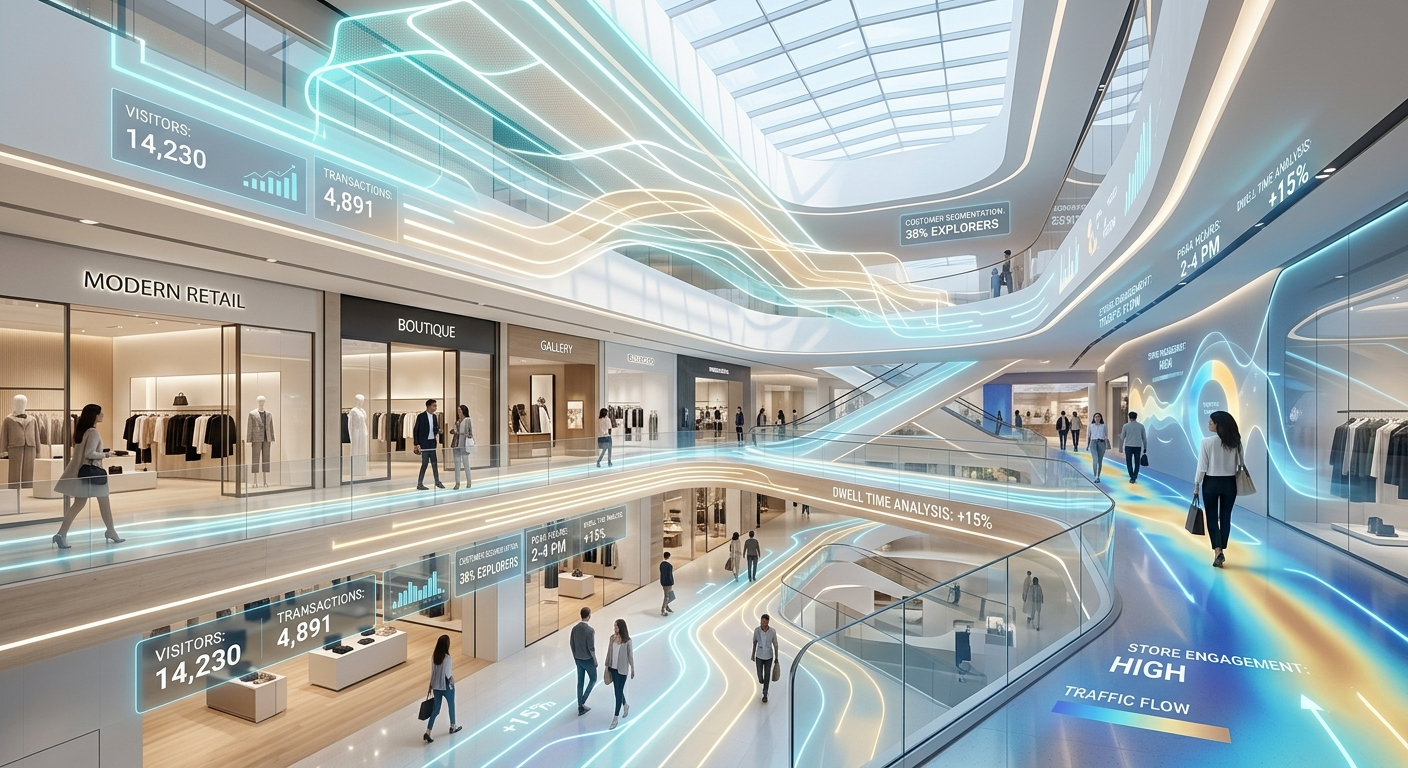
A shopping center is more than the sum of its stores. To manage it well, mall teams need to know how many visitors arrive, where they go and how long they stay. Counttrack gives operators, asset managers and leasing teams a consistent view of visitor behavior across entrances, floors and zones.
Instead of relying on estimates or the loudest opinion in the room, teams can base conversations about tenant mix, events and layout on the same set of numbers. The sections below describe what that looks like in practice.
Visitor counting starts at the entrances. Counttrack people counting sensors measure how many people enter and leave the building, so every day has a consistent total.
Consistency matters as much as accuracy. When every entrance and every property is measured the same way, numbers can be compared over time and between centers without caveats.
Where a mall has several entrances, a transit connection or an anchor store with its own access, the setup can be planned around those routes so the total reflects real visits.
Beyond the total, Counttrack customer flow shows how visitors move through the building. Depending on the sensors installed, heatmaps highlight crowded areas and quiet zones, so you can see which corridors, wings and floors are used and which are passed over.
Dwell time adds the second dimension. It shows where visitors stop and where they hurry, which helps you judge food courts, seating areas, play spaces and event stages by how they are actually used.
Looking at weeks rather than single days separates everyday patterns from short peaks, and makes it easier to judge whether a change has made a lasting difference.
Counttrack 360 brings visitor data together in one platform. Dashboards let you compare floors, wings and time periods, and follow the performance of a single center or of several locations.
For mall groups, this means the same definitions and the same reports in every location, which makes benchmarking and regional reporting much simpler.
Reporting is available in real time, so operations teams can react on the day while management looks at longer trends.
Footfall and dwell time give leasing teams a factual basis for conversations about placement, signage and tenant mix. Quiet corners and busy routes become visible instead of assumed.
For events and campaigns, you can compare visitor numbers and dwell time before, during and after, using the same weekday and hours as a reference.
Sharing the results with tenants makes the next discussion easier, because everyone is looking at the same data.
On peak days, knowing how many people are in the building right now helps teams plan staffing, security and visitor guidance.
Counttrack live occupancy follows entries and exits in real time, so you can see how many people are inside the center or in a defined area at any moment.
The same data can support capacity limits where they apply, for example at large events or in specific zones.
Every center is different. A short conversation about your layout, your entrances and the questions your team wants to answer is usually the best starting point for deciding where to measure.
Our team provides global support and manages the infrastructure, so you can focus on what the numbers mean for your center.
To discuss what this could look like for your shopping center, contact our team.
What can Counttrack measure in a shopping mall? Visitor counts at entrances, flow and dwell time in key areas, and live occupancy, all available in the Counttrack 360 platform.
Can several centers be compared? Yes. Data from different locations can be viewed side by side in the platform, using the same definitions everywhere.
How do we get started? Contact us with a short description of your center, and we will help you decide where and what to measure.