driving Retail Performance
09.11.2026
Why pay for additional hardware when your store already has security cameras? It's a reasonable question. Today, software can turn existing cameras into people-counting systems and lower the initial investment.
But before you choose a solution on hardware cost alone, there is a more important question to ask: how much could inaccurate or incomplete visitor data cost your business?
People-counting data isn't just a number on a dashboard. Retailers use it to measure conversion, compare stores, evaluate campaigns, plan staffing and make investment decisions. When visitor numbers are wrong, the conclusions drawn from them can be wrong too.
A simple example: a store has 1,000 actual visitors and 100 transactions in a day, so its real conversion rate is 10.0%. If the system misses 10% of visitors and reports 900, the conversion rate rises to 11.1%, an 11% overstatement.
The store hasn't sold anything more and its performance hasn't improved. Only the data has changed. Yet management could easily conclude that the store is doing better than it really is.
Wrong store comparisons and misleading marketing results. A store with undercounted traffic can look like a conversion leader, so you may reward the wrong location or copy a strategy that doesn't work. If counts are off before or after a campaign, its apparent effect on traffic and conversion is off too.
Poor staffing decisions and unreliable benchmarks. Missed peak-hour traffic makes a busy store look quieter than it was, which affects staffing plans and customer service. Comparisons with other locations, cities or market trends also mean little when the underlying traffic data is incomplete.
Mistaken investment decisions. Expansion, refurbishment and operating budgets can end up resting on unreliable measurements. The real cost of bad data isn't the missing number. It's the decision you make because of it.
Many solutions built on existing security cameras depend on an external processing computer, a local server or a cloud analytics service. Each one is an additional dependency, and counting can be interrupted even while the store is online.
Typical causes include video streams that stop reaching the analytics system, local network problems such as switch failures or congestion, changed camera passwords, IP addresses or firmware, a processing PC that crashes or restarts, and upload, VPN or cloud connection problems. The most costly case is an outage nobody notices for hours or days.
Some systems recover through buffering, local recording and automatic reprocessing. Others lose visitor data for good if the video never arrived or the recordings are no longer available. An active internet connection does not guarantee continuous people counting.
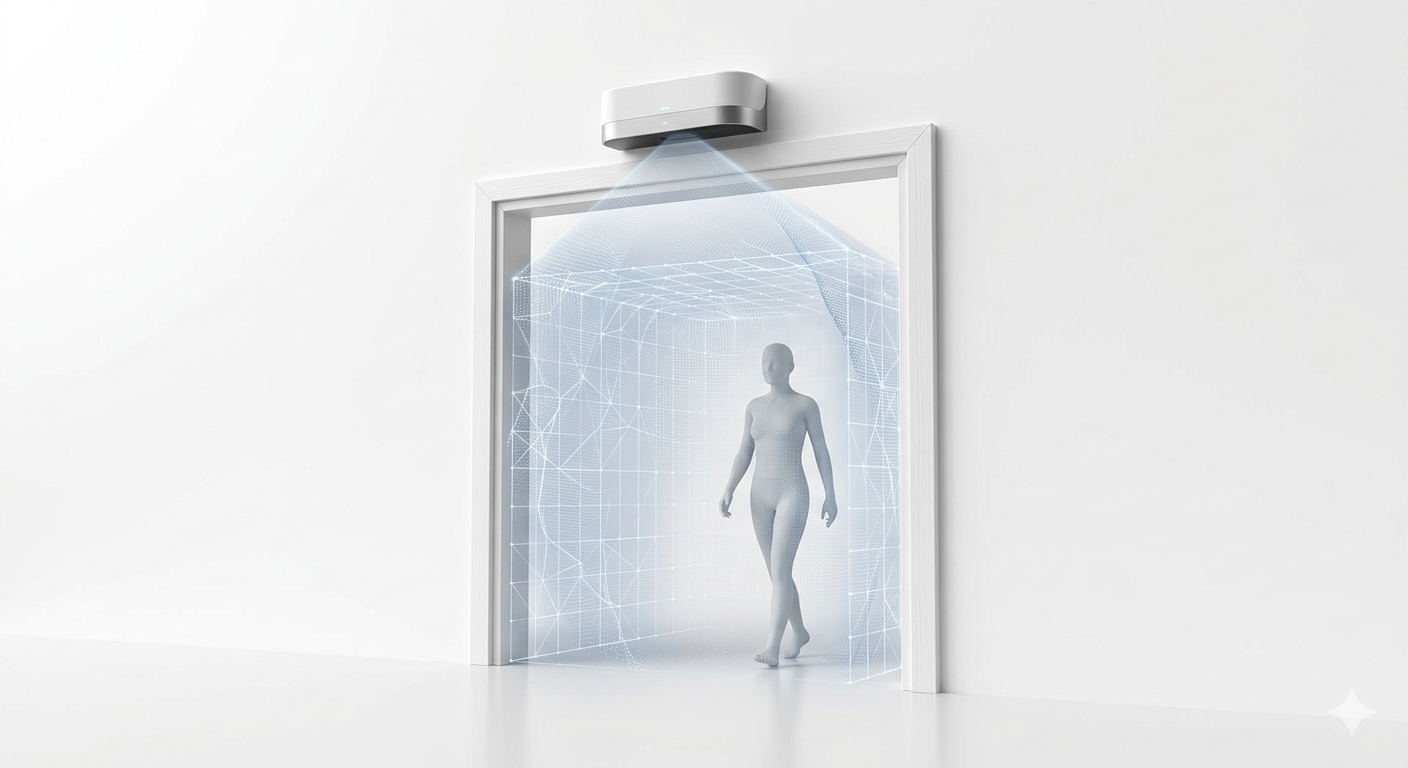
Dedicated sensors are designed for one job: measuring how people move through entrances. Depending on the technology and model, specialised sensing such as 3D measurement helps separate people walking close together, and the sensor is positioned and calibrated for entrance traffic rather than general surveillance.
Counting takes place inside the sensor, with no continuous video feed to an external computer or cloud service. Sensors with suitable local storage keep counts during connection drops and sync them when communication returns, and changes to security cameras, recording software or video PCs need not affect a separately operating sensor.
Standardised devices and installation procedures also keep measurement comparable across a store network. Well-designed camera-based solutions can offer several of these capabilities too. What matters is verifying them, rather than assuming every camera-based system performs the same way.
1. Accuracy: Has the system's counting accuracy been independently tested in conditions similar to my store? 2. Completeness: How do I know whether every hour of the day contains valid counting data?
3. Continuity: What happens if the video stream, local network or processing system fails? 4. Recovery: Can missing data be recovered automatically after an interruption? 5. Monitoring: Will we be alerted when counting stops or data quality deteriorates?
If your provider cannot answer these questions clearly, the hardware savings deserve a closer look.
At counttrack, we believe reliable retail intelligence begins with accurate, complete and trustworthy visitor data. That's why counting technology should be chosen not only on initial investment, but also on measurement quality, operational reliability and long-term business value.
counttrack offers 3D, 2D, radar, ToF and AI sensors, plus Edge software for existing IP cameras, so we can recommend what fits your entrances. With 18 years in visitor counting and 5,500 devices in 2,000 stores across 10 countries, we know what reliable data takes.
Before you save on hardware, make sure you're not compromising your data. Talk to our team about your entrances and we'll give you clear answers to all five questions.
Can I use my existing security cameras for people counting? Often yes, with the right software. Check accuracy at your entrances, how the system handles network or PC failures, and whether missing data can be recovered.
How much does a 10% counting error matter? More than it seems. If 10% of visitors go uncounted, a store with a true 10.0% conversion rate reports 11.1%, which can distort store rankings, campaign results and staffing plans.
How do I know my counting data is complete? Ask your provider for hourly completeness checks and automatic alerts when a device stops counting or data quality drops.