20.01.2025

Consumers Aren’t Buying Less — They’re Buying Choicefully. What That Means for Retailers.
The Myth of “Weak Demand”

“No one’s buying anymore.”
That phrase has become common in retail conversations, earnings calls, and boardrooms. But according to a recent New York Times article, the reality is more nuanced.
In “No One’s Buying? Maybe Consumers Are Just ‘Choiceful,’ Executives Say”, Lora Kelley explores how retail executives are increasingly using the term “choiceful” to describe today’s consumer behavior.
📅 Published January 18, 2026
🔗 Read the article here: https://www.nytimes.com/2026/01/18/business/no-ones-buying-maybe-consumers-are-just-choiceful-executives-say.html
The idea is simple but important: consumers haven’t stopped spending — they’ve become more selective about what deserves their money.
The Myth of “Weak Demand” “No one’s buying anymore.”

Component

What Does “Choiceful” Actually Mean?

The article notes that the word choiceful has appeared with growing frequency in earnings calls from major companies including Target, Macy’s, Walmart, Costco, and Mastercard.
Behind the language is a clear shift in behavior:
- Consumers are buying fewer units
-
They’re prioritizing value, relevance, and purpose
-
Spending levels may be stable, but decisions are sharper
As retail analyst Sucharita Kodali puts it in the article, “Choiceful is coded language for: sales or units are down.
But operationally, it means something more interesting: customers are filtering harder than ever.

Component

Why Footfall Alone No Longer Tells the Full Story

For years, retailers focused on a core metric:
How many people walked through the door?
In a choiceful environment, that metric alone is no longer enough.
Two stores can have:
- Similar visitor counts
- Comparable assortments
- The same brand positioning
…and still deliver very different results.
The difference lies in behavior inside the store:
- Where shoppers slow down
- Which zones they ignore
- When interest turns into hesitation
- How layout, flow, and staffing influence decisions
Traffic still matters — but what people do after entering matters more.

Component

What We See in Real Stores

Across malls and retail chains using counttrack, we consistently observe patterns that align with “choiceful” behavior:
- Footfall remains stable, but items per visit decline
-
Dwell time concentrates in fewer, high-intent zones
-
Conversion gaps widen between similar stores
- Shoppers decide faster — and leave faster when expectations aren’t met
These are not signs of disengagement.
They are signs of focused intent.
Customers are scanning, evaluating, and choosing — with less patience for friction or irrelevance.

Component

From Counting Visitors to Understanding Decisions

In a choiceful era, retail advantage shifts from volume to insight.
Success is no longer driven by:
❌ More traffic
❌ More promotions
❌ More assumptions
It’s driven by understanding:
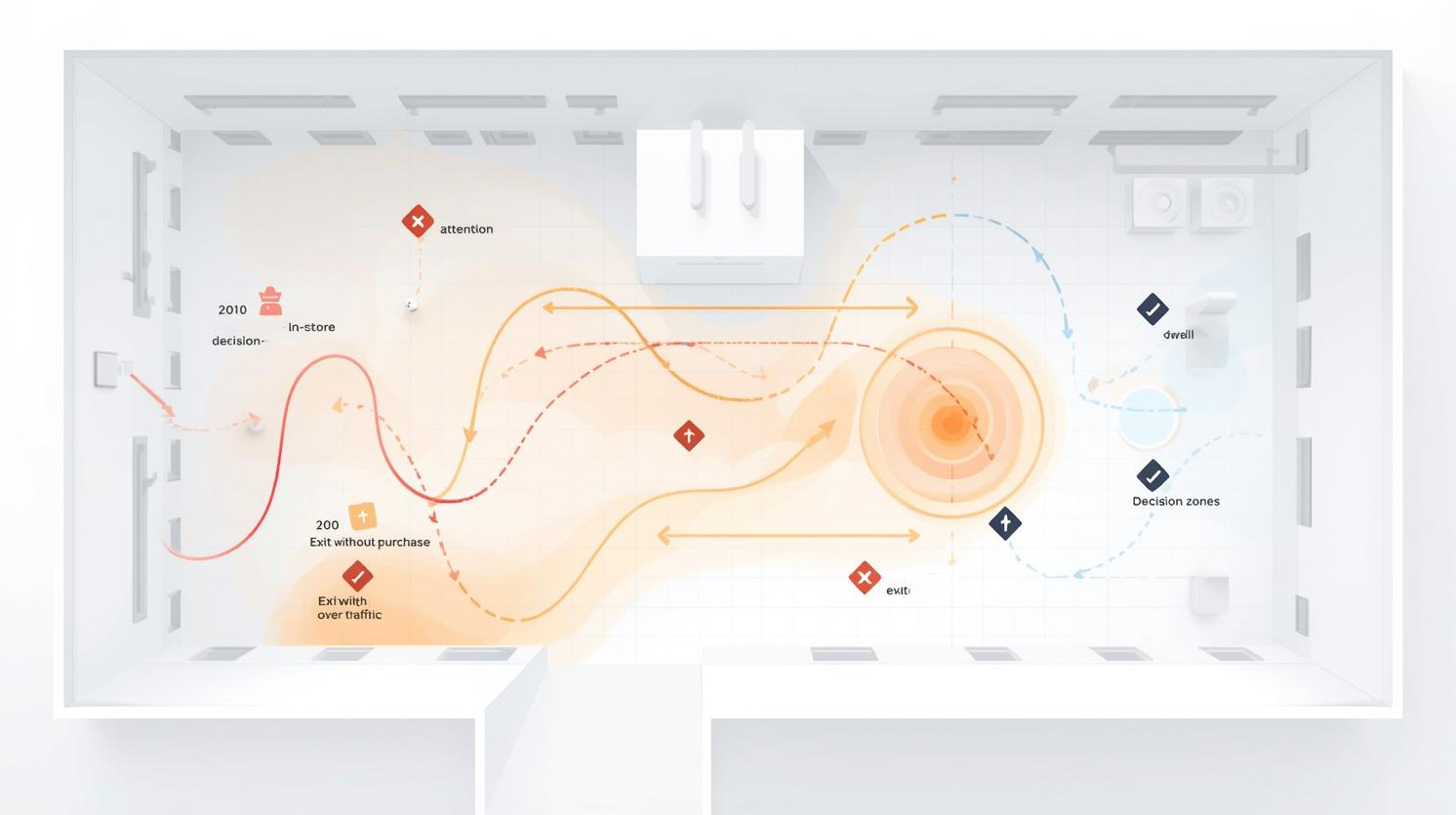
- Customer flow paths
- Zone-level dwell and drop-off
- Bottlenecks and dead zones
- The interaction between customers, staff, and space
When retailers understand how customers move and decide, they can optimize layouts, staffing, and experiences — without relying on discounts or guesswork.

Component

Why “Choiceful” Is Actually an Opportunity

Although the term often appears as a defensive explanation in earnings calls, it represents a real opportunity for retailers.
Choiceful consumers:
- Reward relevance
- Punish friction
- Respond to clarity and ease
Retailers who adapt can:
- Improve conversion without increasing traffic
- Optimize existing space instead of expanding
- Deliver better experiences with data-driven decisions

Component

Final Thought: The Shift From Numbers to Behavior

The most important retail question is no longer:
“How many people came in?”
It’s becoming:
“What did they do once they were inside — and why?”
At counttrack, we believe this is the shift from counting to understanding.
And in a choiceful world, understanding wins.